Biola University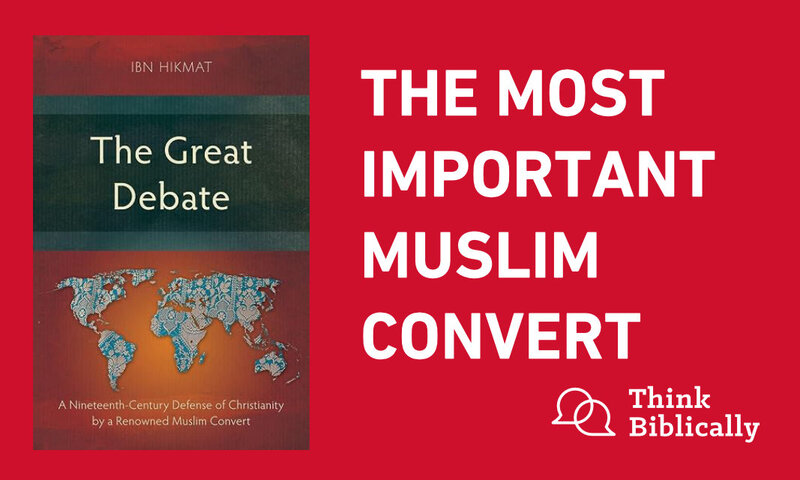
What can a nineteenth-century Christian convert from Islam teach us about faith, truth, and one of history's most influential Christian鈥揗uslim debates? Today, Sean is joined by an anonymous Christian scholar living in a predominantly Muslim context where openly following Christ can be life-threatening. Because of active persecution, our guest appears without revealing identifying details. Today, he will talk about his book , focused on the most important Muslim convert to Christianity, and explores the historical roots of modern Christian-Muslim engagement especially the often-overlooked Urdu apologetics tradition.
Episode Transcript
Sean McDowell: [upbeat music] Hey, friend. Sean McDowell here. Welcome to a special episode of the Think Biblically podcast. We actually have in studio today Ibn Hikmat, who's written a fascinating book called The Great Debate, where he goes back to this amazing convert, who traces his roots all the way back in the origin of Islam, who in the 1800s becomes one of the top apologists for the Christian faith. Our guest had also shared some of his story, and his father had a supernatural encounter with Christ in a predominantly Muslim country and, came to faith. So this is a little bit longer than normal, but you're gonna love our guest's storytelling, his energy, and just his insights on Islam today. So enjoy this episode of the Think Biblically podcast. I've interviewed quite a few Christians, many ex-Muslims, who minister to Muslims, but you are the first who requested to keep your identity hidden. Why?
Ibn Hikmat: Well, Dr. Sean, I live in a, in a context, in a country where, you know, majority Muslims live, and, very aggressive majority as well, where lives of those who follow Christ are threatened. Active persecution takes place. And, you know, just finger-pointing can be very dangerous to your life. It can be life threat. So that's the reason, you know.
Sean McDowell: That makes total sense.
Ibn Hikmat: Yeah.
Sean McDowell: Your book is called The Great Debate.
Ibn Hikmat: Yeah.
Sean McDowell: And it's highlighting this remarkable convert who, we're gonna get into this, was such a significant Muslim who, you know, century half ago, ended up becoming a Christian debater.
Ibn Hikmat: Yeah.
Sean McDowell: When I first saw your book, and you talk about a convert, I thought you were the convert. I read further, I'm like, oh, we're talking about a really important figure here in the history of Christian and Muslim engagement.
Ibn Hikmat: Yeah.
Sean McDowell: You grew up as a Christian in a predominantly Muslim country.
Ibn Hikmat: Yeah.
Sean McDowell: What was that like?
Ibn Hikmat: Well, it is, [clears throat] something you cannot imagine in the West what ... Is like, because from the childhood, you are, taught from the very beginning. Even your family will be telling you, "Don't debate. Don't talk the religion." you are oppressed. You are, picked up. Even the little kids in the schools will ... Picked up by teachers. "Oh, you worship three gods. You are polytheist," you know?
Sean McDowell: Oh, picked up, you mean like picked on and treated differently-
Ibn Hikmat: Yeah, picked on
Sean McDowell: ... By even teachers?
Ibn Hikmat: Teachers.
Sean McDowell: Oh, wow.
Ibn Hikmat: Yeah.
Sean McDowell: Okay.
Ibn Hikmat: Yeah. So, you know, Islam is the only true religion, so you have, you're supposed to be. You know, if you are living in there, the only true religion is Islam, and you have to be, Chri- a Muslim. And many a time you, suffer verbal abuse. Many a time- ... You suffer, you know, psychological trauma. Identity becomes really difficult, identity crisis, whether you are, really truly a national or... Because identity is seen through the lens of faith. Who are you? You know, it's not national identity. It's a faith identity. So from the very beginning, you begin to question, you begin to, debate within yourself, why you are Christian and why you want to be a Christian.
Sean McDowell: Mm-hmm.
Ibn Hikmat: You know? It's, it will be easy for, just to convert to Islam and be like anyone else. So you begin to count the cost as a child even to follow Jesus.
Sean McDowell: Wow, as a child you begin to count the cost. Now, I wanna, I wanna circle back to this, but how did your family become Christian? How far back does this go as far as you're aware?
Ibn Hikmat: Well, my, own, father, he came to the Lord. And, came to the Lord with very powerful, deliverance experience.
Sean McDowell: Okay.
Ibn Hikmat: You know?
Sean McDowell: I'd love to hear briefly if you're able to share it.
Ibn Hikmat: Yeah.
Sean McDowell: What does that mean?
Ibn Hikmat: My father was possessed by a very evil spirit. And, there was nobody who could cast out that spirit. So many people came. Nobody ever was able to cast out that spirit. And then an evangelist came, and my father happened to meet him and talk to him. It was late night. They kept talking, and then that evangelist began to feel sleepy, so he, said to my father, "Go home and sleep." But my father was afraid that when he will be alone at home, he will be attacked by that evil spirit. He was physically tortured, abused.
Sean McDowell: Oh.
Ibn Hikmat: But that evangelist said something so straight, simple, powerful, that everything completely transformed and changed. He told my father, "Go and, pray in the name of Jesus, and evil spirit will not dare to enter your four walls of the house. And if she does," and I I apologize to say this word, he said, "You call me a son of a bitch and not a servant of the Lord."
Sean McDowell: [laughs] Okay, wow.
Ibn Hikmat: So these were the words so powerful that they hit straight into my father's heart, and he said so many exorcists came. Nobody made such a claim, so Jesus must be some great power. So there and then, you know, next day he was completely transformed, and, from there begins the roots of my faith, how with, in the name of Jesus, the demon ran away, the most powerful demon, and this deliverance experience is at the root of my faith, my family's faith, and everything. You know, you know, the real experience of Jesus' power.
Sean McDowell: Was this before you were born that you had this experience?
Ibn Hikmat: Yeah, way before I was born.
Sean McDowell: Okay.
Ibn Hikmat: Yeah.
Sean McDowell: How common are these type of experiences where you're from, that you hear about or you see?
Ibn Hikmat: Well, it's not, well, like the West, you know, when you really do see the power of Jesus unleashed against the demons and the evils of this world in the worship services, where it's not uncommon. Hundreds-
Sean McDowell: Mm-hmm
Ibn Hikmat: ... Of Muslims come, to the worship services to get, you know, exorcism and, be healed, because he is real. He is alive. You know, he shows up where the darkness is reigning-
Sean McDowell: Yeah
Ibn Hikmat: ... And he destroys the citadels of the devil.
Sean McDowell: So we're not gonna reveal where you're from, for reasons that you mentioned.
Ibn Hikmat: Yeah.
Sean McDowell: But I can mention one country you're not from, which people will notice from your accent. You're not from Iran. I have a scholar who, he's considered by many to be the Billy Graham of Iran.
Ibn Hikmat: Mm-hmm.
Sean McDowell: Had amazing coming out of faith about being a Muslim, coming to faith in Christ.
Ibn Hikmat: Yeah.
Sean McDowell: And he was on just a few weeks ago, and he said a pretty radical statement. He said, he said, "Iran is no longer an Islamic country."
Ibn Hikmat: Yeah.
Sean McDowell: And in part because there's so much disillusionment at the government.
Ibn Hikmat: Yes.
Sean McDowell: And in their minds, they are so many people there are not separating what might be considered a pure, a pure, true Islam from the way it's represented in their government. And he said, "Whenever this thing ends and the powers are gone, we're gonna see droves of people leave Islam. Many come to the Christian faith."
Ibn Hikmat: Yeah.
Sean McDowell: Your context is different, but what might outsiders like myself not see about what's taking place in your country? Are there people coming to Christ? Are people having visions? What does that look like, as much as you're comfortable telling us?
Ibn Hikmat: Yeah, you see always,
Ibn Hikmat: wherever the oppression is, wherever the darkness rules- ... Jesus comes in.
Sean McDowell: Amen.
Ibn Hikmat: And comes in ways which we don't understand, you know? There definitely, there are people, of course, because of the fear of the authorities, they don't reveal. They are underground. There are people always, believing in Jesus, and more and more so, as you probably already are aware. I think this is the time when, in the entire history of Islam, more Muslims are coming to Christ than ever before. And, you go on YouTube and you see some of the, Muslim apologists just literally, you know, crying and shouting that 25% Muslim youth is leaving Islam.
Sean McDowell: Interesting.
Ibn Hikmat: You know? And, many many are turning, just to nowhere, going, becoming atheist. But generally, if any Muslim genuinely converts- ... A Muslim converts to Christianity.
Sean McDowell: Oh, if they convert to any faith, it's typically to Christianity.
Ibn Hikmat: Yeah. Yeah, definitely.
Sean McDowell: Why do you think that's changing now? Why are we seeing more Muslims come to faith? Is it the access of social media and information? I could guess at other reasons, but what would you say is behind that, if you had to guess?
Ibn Hikmat: Most certainly the increase of knowledge, and, there have been so many, I think, very dedicated apologists, Christian apologists, even if you want to say polemicist,
Sean McDowell: Sure
Ibn Hikmat: ... That is true, [laughs] because they have been just laying bare the real foundations of Islam and what is the truth about Islam. So in 1,400 years, mullahs have just concealed it under, the, you know, this guise. Oh, it is, Islam cannot be properly understood unless it is, you know, in Arabic, and you have to understand Islam. And, but this time of, you know, the world and the age where we are, there's so much being unearthed, and people, first time- ... They are really coming to know what are the sources of Islam, what are the real teachings of Islam. You know, the people have actually layered it and concealed it, what the real Islam is and what the Islam of Muslim scholars is. You know, scholarly interpretations or, scholarly, covering of what is the real Islam, but, and presenting it in such a way that it seems like, oh, that is really the Islam. Like, you know, everybody just takes, the root word and keeps saying Islam is peace. And so, does ... Mean Islam is peace? Everywhere it is propagated, Islam is peace. But when you go at the nitty-gritty and, see the development of Islam, and of course, the latter years of the prophet of Islam, would you find any peace there? You know? There's no peace.
Sean McDowell: That's a great question.
Ibn Hikmat: Yeah.
Sean McDowell: So my understanding is Islam means submission, and a Muslim is one who submits. So if everybody submits-
Ibn Hikmat: Yeah
Sean McDowell: ... We would, in principle, have peace. But the means of getting there-
Ibn Hikmat: Yeah
Sean McDowell: ... Clearly through the sword, there's historical and theological precedence for this.
Ibn Hikmat: Absolutely.
Sean McDowell: Would you agree with that take?
Ibn Hikmat: Absolutely. And I mean, it's a, it's a, it's a kind of a way of thinking. Everyone have to submit to Allah, and all other people have to submit to Muslim as well. You know, it's not just submitting to Allah. Who is Allah's representative? Of course, there will be like mullahs, like in Iran and anywhere else where, Islam becomes the state religion. So Allah is not coming down in person to rule, so everybody else is supposed to submit to Muslims. You know, so that is the way it is. It started off, of course, as the history goes, that, it started as a peaceful invitation, but then you come to the next, 10 years, last 10 years of, the prophet of Islam, and you have, like, 50 plus wars and, you know, the looting and killing and, everything. That's, everybody knows what happened, you know. And the most of the time you see, all Arabian countries which were majority Christian countries, what happened to them? You know, Yemen and, Libya and, you know, you know, Syria, Iraq. All these back then, majority Christian countries. They all swallowed up, and they were not just converted through peaceful means, and at least, you know, in the beginning of it was through the power of the sword. And,
Ibn Hikmat: there is, there is a thinker, Islamic thinker you might have come across, who is the father of modern, you know, the, terrorist organizations.
Sean McDowell: Is this Sayyid Qutb?
Ibn Hikmat: Jihadi organizations. No, Sayyid Qutb actually was inspired by him.
Sean McDowell: Oh, okay.
Ibn Hikmat: Okay.
Sean McDowell: Tell me.
Ibn Hikmat: It's,
Sean McDowell: Yeah
Ibn Hikmat: ... It's a Pakistani, some scholar is known Abul A'la Maududi. So Maududi, who wrote, who wrote about, the Islamic jihad and how, all the nations have to submit to Islam, and, he had a very important word to say. He said, "You know, look at the prophet, of Islam, Prophet Muhammad. His early 12 years when he was peaceful, in 12 years he could gain hardly 80 followers, but then he drove, drew sword, then the whole Arabia converted to Islam."
Sean McDowell: And this is a Muslim source, one of the key sources.
Ibn Hikmat: Yeah, of course.
Sean McDowell: And this, we're gonna get to your book here in a minute, called The Great Debate, and it's a very important scholarly contribution on Muslim-Christian debates, and a remarkable convert. This story you were telling me before was blowing me away. I can't wait for my listeners and viewers to hear this. But one of the issues you get into is abrogation.
Ibn Hikmat: Yeah.
Sean McDowell: And so some of these Quranic verses, early ones about peace-
Ibn Hikmat: Yeah
Sean McDowell: ... And about people of the book, are written before, when he's in Mecca, before he has the power in Medina and he shifts.
Ibn Hikmat: Yes.
Sean McDowell: So these later verses-
Ibn Hikmat: Yeah
Sean McDowell: ... Overtake and abrogate earlier ones. Now, we're gonna come back to this, 'cause this is really important, but let me shift to your story. You mention as a child really asking questions, "Do I believe this? Is it worth it?" Being mocked and picked on by teachers.
Ibn Hikmat: Yeah.
Sean McDowell: Was there a moment where you really decided, "I believe this, and this faith is mine"? When was that moment, and what happened?
Ibn Hikmat: Well, I think, I was raised in a Christian family, a very devout Christian family, as you know, and, where the, you know, the teaching of the Bible, reading Bible, praying, every day, every night. That was a part of our family's very strong tradition that I was raised into. But, I was, I think in grade, like 9th or 10th in high school-
Sean McDowell: Okay
Ibn Hikmat: ... You know, when I really, came to the point that, yes,
Ibn Hikmat: I believe wholeheartedly that Christ is the Lord, and He has saved me. You know,
Ibn Hikmat: it is, it is gradual. It's not just a sudden thing. I was raised in such certainty that Jesus is the only savior. And, you begin to read Islamic sources, you find no certainty, and we will come back to those, you know-
Sean McDowell: Yeah, we will
Ibn Hikmat: ... When we talk about this book. So,
Ibn Hikmat: I I went through some certain, you know, not doubts, but at least, you know, the questioning, you know, why I am a Christian. But when you go to the Bible and the Lord is talking to you, this book is so different than the Quran. You know? So different. If you read two books together, there's no comparison. If you're, in the Gospels you are meeting the Lord and the love and the, redemption and the forgiveness and the personal relationship, and, the God who is so distant and you cannot, you know, talk to him. It's so different. Yeah.
Sean McDowell: I love that. It's also just different. In the Quran, it's a lot of sayings about God, whereas the Bible's story. I mean, there's very few stories in the Quran. So I'm sure some people won't like this, but the Bible's just a far more interesting book because it's filled with stories, and we like stories, and we relate to stories, which is, I think, what we would expect if it's actually inspired. But we'll come back to that. So let's get to your book.
Ibn Hikmat: Yeah.
Sean McDowell: And I want people to know, this book came out of your doctoral dissertation.
Ibn Hikmat: Yeah.
Sean McDowell: So there is massive research and document behind this. For those who go, "Wait a minute, I wanna know the evidence for this," they can get the book, follow the footnotes, read it, assess it themselves. We're gonna give folks kind of a 30,000-foot view, but when I started to read it, the title is Let the Convert Speak.
Ibn Hikmat: Yes.
Sean McDowell: And I thought it was you, but then you start talking about this remarkable former Muslim.
Ibn Hikmat: Yeah.
Sean McDowell: Who was he? Why was his story so important, and still important?
Ibn Hikmat: Yeah. Well, to begin with, the, you know, the, Imaduddin Lahis, he traces his genealogy back to the Iranian royalty on one side, and on other side, his, genealogy is linked with Imam Abu Hanifa. And Imam Abu Hanifa is considered to be the second greatest miracle of Prophet Muhammad after Quran. He was so influential that, you know, he laid down the foundations of a Hanafi, Hanafite jurisprudence. You remember, you know the four-
Sean McDowell: Mm-hmm
Ibn Hikmat: ... Schools of
Ibn Hikmat: jurisprudence in Islam. So he is the most important, and most Muslim, they follow, Hanafi school of jurisprudence, so his, relationship with that. But then, at certain point, his forefathers moved to India- ... During the Mughal era. Shah Jahan, the time they, came there. And, he had a state. They were serving the kings, but among them are then you find the Sufi genealogy as well. In the state of Haryana now, it's a place called Hansi, and in Hansi, he has his great-grandfather, whose name is Sheikh Qutb Jamaluddin. He is Qutb in, you know, the Sufi hierarchy, and couple of his other sons are also at the status of Qutbs, and they are still being revered in India as the great Sufi saints. So he was born in, Panipat area, Panipat, area, near Delhi, and there he grew up among, his family, very devout, Muslim family. From the childhood, he learned Quran, and he would go to the Sufi shrines. Everything he wanted to do, and even this, whatever he was studying, he said he was doing it for the one single purpose to know Allah. About all his, you know, from the childhood, he started going, everywhere to learn, to study, and and meet Allah at some point. So, very devout. And he was also one of the very close, closest associate of, if you, have, any idea of Maulana Rahmetullah Karanvi. Rahmetullah Karanvi was the one who debated with the great, you know, the Western apologist known as Karl Funder.
Sean McDowell: Karl Funder.
Ibn Hikmat: Karl.
Sean McDowell: Now, before you keep going-
Ibn Hikmat: Karl Funder
Sean McDowell: ... What what years are we talking? My head are framing this.
Ibn Hikmat: We are talking about here, you know, the, is year 1854.
Sean McDowell: Okay.
Ibn Hikmat: That's when the debate took place.
Sean McDowell: Okay, 1854. So if I may, is this when we're starting to see some of the first public engagements between the East and the West, Muslims-
Ibn Hikmat: Yeah
Sean McDowell: ... And Christians? Like, this is a new phenomenon somewhat?
Ibn Hikmat: Yeah. I mean, under the, British government- ... Now the somewhat restrictions have been lifted up. In the beginning, East India Company wouldn't allow even Christian missionaries to come in.
Sean McDowell: Interesting. Okay.
Ibn Hikmat: Okay? But in 1834, there was, like, imperial, decree by which the British government allowed, you know, the Christian missionaries to come in. So the missionaries started coming in.
Sean McDowell: Gotcha.
Ibn Hikmat: And Karl Funder was thrown out, by Russian czars from Armenia, and, he, from the young age, he has a passion to reach out to Muslims. So via Iran, he came to, India and was employed by the, by the Anglican, you know, community, CMS, you know, organization, hired him, seeing his interest, in Muslim. And he has already written a book called The Balance of Truths you might have come across. And, he translated this book into Urdu language. It has been translated into Persian, and then he started distributing when he came to Agra. Agra was the great seat of, back then of Mughal, you know, the rule, where Agra is very well known for its great, wonder, or seven wonders of the world- ... Taj Mahal. And there, he was challenged then by Maulana Rahmetullah Karanvi for a public debate, face-to-face debate.
Sean McDowell: Mm-hmm.
Ibn Hikmat: He had his assistant, a medical surgeon, Dr. Wazir Khan, who had studied in, England as well, very fluent in English, and he unearthed some of the, higher criticism against the Bible and all that and brought that, you know, research-
Sean McDowell: Interesting
Ibn Hikmat: ... Back to India. So, in, April, in April, this debate took place in in Agra between Maulana Rahmetullah Karanvi, and now you, need to, our audience might, need to understand. Rahmetullah Karanvi became the most famous Muslim apologist- ... In the 19th century. His book is a Hurool Haqq, the, you know, the truth revealed, takes on, you know, Karl Funder's Mizanul Haq, The Balance of Truth, and the debate, the five points of debate agenda that they had. And then this was the book which later on inspired Ahmed, Ahmad Deedat. Ahmad Deedat-
Sean McDowell: Oh, wow
Ibn Hikmat: ... Who sometime debated your father as well.
Sean McDowell: He did. I wanna circle back to that one-
Ibn Hikmat: Okay
Sean McDowell: ... In due time.
Ibn Hikmat: Yeah.
Sean McDowell: Yeah.
Ibn Hikmat: And, Zakir Naik, the modern apologist- ... Is the disciple of Ahmad Deedat.
Sean McDowell: Interesting. Okay.
Ibn Hikmat: Okay? So this Rahmatullah Kiranvi is listed still after nearly 200 years, one of the top 10 most important apologists, Muslim apologists.
Sean McDowell: Ever?
Ibn Hikmat: Ever. So he was, debating Karl Fander, and, Imaduddin was one of the assistant Maulvis on that debate, at that debate. And later on, he was also appointed as the Imam of Royal Mosque of Agra to oppose Fander. But after, you know, some time, he just left everything. He was not satisfied with all his power and position.
Sean McDowell: Huh.
Ibn Hikmat: Went into the jungles of India to perform extreme Sufi rites to meet Allah. But it's a long story.
Sean McDowell: Yeah yeah.
Ibn Hikmat: He yet not, he was yet not able to find Allah, you know? And later on, after 12 years of that debate. So by the way, this debate then became known as the great debate, this Agra debate- ... 1854.
Sean McDowell: Okay.
Ibn Hikmat: And they had five points of agenda. So that was, you know, Naskh or abrogation.
Sean McDowell: Yep.
Ibn Hikmat: There was, you know, Tahrif or you call it, the corruption of the Biblical text. Trinity and Trinity, and the Prophet Muhammad and Quran. Five points of agenda.
Sean McDowell: Wow.
Ibn Hikmat: Okay? So later on, you know, this Rahmatullah took these five points in his two volume, you know, the great book that he wrote, which has become the greatest weapon in the hands of Muslims to attack Christianity. And Imaduddin, after 12 years, when he became Christian, he returned to that great debate and took on the same five-point agenda and destroyed Rahmatullah Kiranvi's arguments.
Sean McDowell: Oh, wow. That is so interesting. That's called the great, the debate. In many ways, we're gonna come to each one of these. But when you talk about abrogation, you talk about has the Bible been corrupted, deity and Trinity, these are kind of the same arguments that people are debating today, which is amazing to see how central these issues are.
Ibn Hikmat: Yeah.
Sean McDowell: Who is the person of Jesus, character of God, how has God revealed himself? These are really the dividing lines, as you know, between Islam and Christianity. So I know I'm gonna butcher it, but say the name again of the individual, the convert we're speaking about in your book. Say it one more time-
Ibn Hikmat: Yeah
Sean McDowell: ... If you will.
Ibn Hikmat: So let me, and say a little bit more about that.
Sean McDowell: Okay.
Ibn Hikmat: His name is Imaduddin.
Sean McDowell: Imaduddin.
Ibn Hikmat: Imaduddin means the pillar of faith.
Sean McDowell: Interesting.
Ibn Hikmat: Okay?
Sean McDowell: Okay.
Ibn Hikmat: So as
Sean McDowell: Huh
Ibn Hikmat: ... Was born in, you know, 1830 into a very religious family. The family's hopes were that he will be a Maulvi, a great religious scholar, to be the pillar of it, the deen Islam. But, from the childhood, as I was saying, he was seeking Allah. He was trying to reach out and find. And as he grew, the one thing that always pricked him, it was like a thorn in his flesh- ... You know, that terrorized his life, always thinking in a very young age, the hereafter. "When I will stand in the, in the presence of God at the day of judgment- ... What will happen to me?" You know? And interestingly, his vexation, his pain, his fear was not coming from worldly thinking. It was coming straight from the Quran.
Sean McDowell: Oh, okay.
Ibn Hikmat: Okay?
Sean McDowell: Huh.
Ibn Hikmat: His pain, his fear, what will happen to him, came right from the Quran itself. In Surah Maryam, it's, verse twen- 71 where Allah just takes upon himself with a kind of irrevocable degree that he will bring everybody into hell. Just imagine. If it is Allah's irrevocable decree, you know, to bring everyone into hell, who can save? And that was his pain- ... How he could be, escape, how he could escape from hell. Allah is going to bring everyone into hell. So for that reason, he studied Orthodox Islam. He did everything. At one point, you know, when he was Imam of the Royal Mosque of Agra, he abandoned everything because he was not satisfied. He was always under the fear of death and what will happen to him. He walked barefoot 200 miles-
Sean McDowell: [gasps]
Ibn Hikmat: ... And came to the place, it's called Karooli, in the mountains where the fresh water stream, flows. And there he performed the extreme Sufi exercises to meet Allah for 12 days. He wrote the name of Allah 125,000, thousand times, each time with his own hand, cutting that piece of paper with a scissor, rolling it in the dough, and feeding to the fish, and at the same time trying to write on his heart the name Allah. After 12 days of, you know, these, you know, fasting and praying and, constantly trying to write the name of Allah in his heart, he became so thin and weak that he says even he couldn't stand against the wind. People around, they started calling him Auliya Allah, or the great saint, and they came running to him, and he preached, but there was no peace in his heart. He haven't found Allah. After, you know, a few years, he came to Lahore and was appointed as a teacher in a teacher training center, where first time ever he read the Gospel.
Sean McDowell: Oh, interesting.
Ibn Hikmat: And by the time he has read the Gospel till the Sermon on the Mount, seventh chapter of the Gospel of Matthew, he said, you know, the firm doubt about Islam took hold on his heart. And for two years, day and night, he read Muslim apologetics against Christianity. Christian apologetics books, directly reading Bible this time. And at the same time, one of his very close friend has already become Muslim, a Christian.
Sean McDowell: Interesting.
Ibn Hikmat: So he was actually trying to bring him back, to win him back.
Sean McDowell: Interesting. Wow.
Ibn Hikmat: But in turn, the word of God so convicted him, that after two years of his research, he came to the conclusion Islam is not a religion from Allah. Only Christianity can offer salvation, and he became Christian.
Sean McDowell: Oh, what a fascinating story.
Ibn Hikmat: Yeah.
Sean McDowell: Driven by living out Islam-
Ibn Hikmat: Yeah
Sean McDowell: ... As much as is possible.
Ibn Hikmat: Mm-hmm.
Sean McDowell: Earning that salvation, being obedient, submitting, not having peace.
Ibn Hikmat: Yeah.
Sean McDowell: Begins to encounter God just by reading the Gospel, Matthew.
Ibn Hikmat: Yep.
Sean McDowell: Sermon on the Mount.
Ibn Hikmat: Yep.
Sean McDowell: But then apologetics for two years was still important to him.
Ibn Hikmat: Absolutely.
Sean McDowell: Which is why he shifted and started becoming a debater [laughs] for Christians, like-
Ibn Hikmat: Yeah, I mean, he was a debater before he became Christian. But two years of his very intense research, my argument in the book is, actually prepared him to become one of the most, you know, revered and finest apologist.
Sean McDowell: Yeah.
Ibn Hikmat: You know, as he was trying to understand his own religion and the religion of Christianity, you know? So in the process of this research, he became a great apologist, and right after his conversion, you know, he came out as his first, small bio- autobiography where he is, telling the story that he has really become Christian, because many wouldn't even imagine ever that, a Maulvi at the, of the status of Imaduddin could convert to Christianity, you know? And then he wrote, book after book, nearly 53 big and small books, nearly half of them in defense of Christianity and, refuting Islam.
Sean McDowell: Oh, that's incredible. I love that. Now, how... I had not heard of him before. I haven't studied the history of Islam. You're making-
Ibn Hikmat: Yeah
Sean McDowell: ... Some connections for me that really help. How common are stories like his?
Ibn Hikmat: Yeah.
Sean McDowell: Does he just stand out 'cause it's like, here's the one, or there are more people maybe we haven't heard of with similar roots and dramatic, and dramatic stories?
Ibn Hikmat: Yeah. There are many, actually. And, unfortunately, you know, the literature, the largest literature, apologetic literature, is created in Urdu, which has not been studied. The longest debate have taken place in India, not in Arabian countries. Okay?
Sean McDowell: I didn't know that.
Ibn Hikmat: Yeah. And the largest apologetic literature produced in Urdu language. So, that is buried. There are hundreds of those kind of stories. In,
Ibn Hikmat: 1893, this great man, Imaduddin, was invited by the World Congress of Religions in Chicago. So he wrote a paper which is called, Epistle to Chicago.
Sean McDowell: [laughs]
Ibn Hikmat: He didn't come. He was old guy back then. And then, in that letter, he lays down the effects of the gospel among Muhammadans. Back then, you know, they were used to call them Muhammadans-
Sean McDowell: Yeah
Ibn Hikmat: ... Rather than Muslims.
Sean McDowell: Yep.
Ibn Hikmat: And in that letter, at the end of it, he appended 117 highborn Muslim convert to Christianity. But there are many many more which are not listed there.
Sean McDowell: And that was 1893. Seven years, didn't he die 1900, if I read correctly-
Ibn Hikmat: He he died-
Sean McDowell: ... Around that time
Ibn Hikmat: ... Exactly in, at the-
Sean McDowell: Okay
Ibn Hikmat: ... You know, 1900. So there is, like, you know, Zahurul Haq, the first, you know, a convert of the Episcopal Methodist Church, who rose to the prominence of becoming the first Indian presiding elder as well, you know? And he is the one who also brought hundreds of Muslims, thousands of Muslims, to Christ. And there is another guy, it's Hasan Raza Khan. Wow, what a man. Without any help of any missionaries, he created the whole diocese, and thousands of people he brought to the Lord.
Sean McDowell: Thousands.
Ibn Hikmat: So there are, you know- ... So many illustrious Muslims who converted, but their stories are unknown.
Sean McDowell: Well, A, we need to tell their stories, and B, we need to get this Urdu, treasure trove of apologetics translated into English so we can use
Ibn Hikmat: Absolutely
Sean McDowell: ... And spread the word. With AI, it would seem very doable.
Ibn Hikmat: Yeah.
Sean McDowell: Now, there was this debate that Imaduddin, am I close to saying that?
Ibn Hikmat: Yeah
Sean McDowell: He was aware of this.
Ibn Hikmat: You're getting there. [laughs]
Sean McDowell: I'll take... I'm good with that, getting there ... That, he watched this great debate, he responds to it, and he said there were five things-
Ibn Hikmat: Yeah
Sean McDowell: ... At the core of it. Let's take them one by one. And you have, I mean, extensive chapters on this.
Ibn Hikmat: Yeah.
Sean McDowell: But just kind of give us the highlights, and the first one is, let me make sure I won't say it right, but naskhs?
Ibn Hikmat: Naskh, yeah.
Sean McDowell: Naskh, which means abrogation.
Ibn Hikmat: Abrogation.
Sean McDowell: So explain, what is it? Why is this important for the debate?
Ibn Hikmat: Yeah.
Sean McDowell: And what's the argument that we would want people to know about it?
Ibn Hikmat: Yeah, sure. Now, naskh is not usually debated.
Sean McDowell: Okay.
Ibn Hikmat: You know? You will not find so many debates, on naskh, but ... In Urdu literature you will find. But this became actually the, you know, number one, agenda, in the debate. Very important. Now, this is one of the most dangerous and trickiest doctrine in Islam, okay?
Ibn Hikmat: Let me, quote one, the saying of, Ali, the cousin of Muhammad and the, you know, the most revered person in Shi'a Islam. It is narrated that at one point he asked one judge, "Do you know which verses of the Quran are, you know, abrogated, and what are those who abrogated, abrogating and abrogated? Do you know those, all those?" And, that Muslim judge said, "No." And he said, "You ruin yourself and you ruin people." Another guy has said that from all Islamic sciences, as of a duty, it is most important to know the doctrine of naskh, abrogating and abrogated. Now, in a simple term, this doctrine goes like this, that the earlier revelations are superseded or canceled out by the later revelations. That is the simplest, you know, definition you can say. Now, in the beginning, this is an intra-Quranic phenomena. It is reported as if, Muslims will take it was, Muhammad was being accused of changing or altering- ... His revelations. He is saying one thing earlier, and he is saying a different thing later. So saying, okay, you know, the previous one is now canceled, and the new, command has come, a new-
Sean McDowell: Gotcha
Ibn Hikmat: ... New verse has canceled the old one. So that is, the way, it is simply, placed. Now, this is one of the most important aspect in jurisprudence of Islam. How do you construct laws to govern?
Sean McDowell: Mm-hmm.
Ibn Hikmat: So there are, in the beginning, some verses which seems to be very peaceful, and a peaceful invitation, to you is your religion, to mine my religion. There is no compulsion in religion, which most Muslims, you know, in, interfaith, dialogues will say, "Oh, Islam is peace, and there's no compulsion in Islam." But then you come to the very famous, you know, the chapter nine and the sword verse-
Sean McDowell: Surah nine, yep
Ibn Hikmat: ... And the things like that. And some scholars have said, you know, that single verse has abrogated 500 earlier verses of Quran. Just single verse. Now, there is a debate. Some people, you know, back and forth can say, oh, there is no
Ibn Hikmat: naskh in the Quran and that. But importantly enough, towards the 10th century, Muslim scholars began to apply this intra-Quranic principle-
Sean McDowell: Okay
Ibn Hikmat: ... To the Bible- ... And to other religious books, arguing- ... Since Quran is the last and the final revelation, and the total, you know, the, kind of, the law for governing the conduct in the societies, all earlier revelation has to be canceled by Quran. So it abrogates everything. So if that happens, that means Christianity is gone. Bible is no more needed. You know? Only the Quran. So that's why it is so important, you know? And it is so important also because only the scholars, they know which verse has abrogated the other, and then it is so tricky. Quran abrogates Quran, and Quran abrogates Hadith abrogates Hadith, and Hadith abrogates Quran. So what really is left? You know, it started off from one incident in the Quran. You know, at one point, Prophet Muhammad was trying to win Meccans, win Meccans, you know, to believe in him. They were not responding. So the story goes, it it is, recorded, you know- ... Within the Quran where you know, the Salman Rushdie and others, you know, came to be known as the Satanic verses.
Sean McDowell: Mm-hmm.
Ibn Hikmat: So Muhammad, in in Mecca, so it is told, you know, he just appraised the idols, the three idols of, Kaaba, Al-Lat, or Manat, and Ozzah, and he said their intercession is to be hoped for. And as he said this, he prostrated, and Meccans behind him prostrated, and they celebrated that he has acknowledged their deities. But the story goes, then came the famous Gabriel, Jibril, and he told them, "Oh oh. That was not the, you know, the revelation from Allah, but Satan threw into your recitation." So these were the satanic verses. So the verse of the Quran goes, "Allah purges," or, "Allah cancels out what Satan throws into the mouth, and he fortifies, he cleanses his verses." So that is the origin of this, you know, the doctrine of Naskh. Just Quranic thing, but then applied to everything.
Sean McDowell: Okay, so let me take a step back. So the satanic verses are verses that Muhammad made-
Ibn Hikmat: Yeah
Sean McDowell: ... That either didn't come true or he changed later.
Ibn Hikmat: Yeah.
Sean McDowell: And if we say Muhammad changed his mind and he said something that didn't come true, Deuteronomy 13 makes it very clear if you get something wrong, you're not a genuine prophet.
Ibn Hikmat: Mm-hmm.
Sean McDowell: And of course, Muhammad wanted to be understood as fulfilling the Jewish and the Christian scriptures and abrogating them.
Ibn Hikmat: Yeah.
Sean McDowell: So what do we do with a blatant false, prophecy? We say Satan was the source of this. Am I explaining this correctly for people?
Ibn Hikmat: Yeah, definitely. I mean, it, this is the tricky thing, you know. Have you ever heard in a biblical, you know, narratives of the prophets where prophets were influenced by devil?
Sean McDowell: That's such a good question.
Ibn Hikmat: You know?
Sean McDowell: The answer's no. [laughs]
Ibn Hikmat: Of course not.
Sean McDowell: Of course not. [laughs]
Ibn Hikmat: I mean, if a prophet is under the control of a Satan and he speaks his word, he puts his word, and they are taken as the word of God, how can you say how much of that book is really the word of God? If once you are influenced, maybe you are influenced hundreds of time.
Sean McDowell: That's a fair question. I mean, and there's-
Ibn Hikmat: Yeah
Sean McDowell: ... A difference between having Jesus, you know, prophecies that He makes about, "No one stand, people standing before me will see my return," and scholars differing over how to make sense of that, and having it, Him saying, "Well, the reason we can explain this away is for that season, He was being inspired by Satan." That would change everything.
Ibn Hikmat: That would change everything.
Sean McDowell: I mean, that would be game over-
Ibn Hikmat: Yeah
Sean McDowell: ... In many ways.
Ibn Hikmat: Yeah. So I mean, he couldn't actually differentiate whether it was Allah's word, Allah being inspired or devil was inspiring him.
Sean McDowell: Man.
Ibn Hikmat: So until Jibril, or the Gabriel came and told him, "Oh, no no. These words were not Allah's word. These were words put in your mouth." And the tragedy of it is, it says, "Just as devil threw in the mouth or the recitation of former prophets." Do you find any former prophet
Sean McDowell: No
Ibn Hikmat: ... Whose mouth devil threw [laughs] the inspiration?
Sean McDowell: See, here's the-
Ibn Hikmat: Yeah
Sean McDowell: ... Challenge, is it talks about in, it, that in 2 Corinthians, that the devil appears as an angel of light.
Ibn Hikmat: Of light, yeah.
Sean McDowell: So allegedly, when Muhammad received what are now the satanic verses, he believed it was from an angel of light.
Ibn Hikmat: Until the Gabriel comes. [laughs]
Sean McDowell: And then Gabriel comes-
Ibn Hikmat: Yeah
Sean McDowell: ... Who he believes is now an angel of light.
Ibn Hikmat: Yeah.
Sean McDowell: But by the same reasoning, how do we know that in some time in the future, there's not going to be, and of course Muhammad's not here, but it raises a question. Yeah, he thought this was Gabriel, thought this was an angel of light. If he's been deceived once, why should we trust him now? I think this pulls the carpet out from him, but this is only one of the issues. And people-
Ibn Hikmat: No, I tell you in my book.
Sean McDowell: Please.
Ibn Hikmat: In my book you will find very clearly that Gabriel, Jibril of Islam is not Gabriel of Bible. Absolutely not. You know? These are the things which have been just popularized, and people think, just, oh, because he is being called Jibril or Gabriel, it is the same angel. It's not the same angel at all, you know? There is absolute difference between the Jibril or Gabriel of the Quran and the biblical Gabriel, and you will find it in my book.
Sean McDowell: And I love that. You go into sufficient depth there, and it always reminds me of Galatians 1:8, where Paul-
Ibn Hikmat: And then you can see, I mean, the the main messenger.
Sean McDowell: Yeah.
Ibn Hikmat: The main messenger, who 22 years is inspiring Muhammad, is not the Gabriel of the Bible.
Sean McDowell: Which Galatians 1:8, Paul says, "If someone delivers to you another gospel-
Ibn Hikmat: Yeah
Sean McDowell: ... Even from an angel, let him be accursed."
Ibn Hikmat: True.
Sean McDowell: There's some interesting overlap with that. Okay, so that's one of them. We might not get through all of these, but the second one, and correct the way I say this, it refers to corruption of the Bible,
Ibn Hikmat: Yeah
Sean McDowell: ... Tahrif? Was I close?
Ibn Hikmat: Tahrif. Tahrif, yeah.
Sean McDowell: Tahrif. All right. What is it, what were the arguments that were made, and what's your response?
Ibn Hikmat: You see, from the very beginning when, [clears throat] Christians refused to accept Muhammad as, Christian and Jews both.
Sean McDowell: Yeah.
Ibn Hikmat: They refused to accept him as one prophesied in the Bible or in the, in the line of Biblical prophets. They rejected him. So then he started accusing Jews and Christians of, you know, altering the Bible, of just corrupting, the Biblical text. You know, the verse of the Quran says, "I am the prophet. They find me written in their scripture, in Torah and the..." Where do you find him? So since the last 1,400 years, Muslims have been, you know, just, banging their heads against the wall to find out, the prophecies of Muhammad in the Bible. They have not succeeded-
Sean McDowell: Mm-hmm
Ibn Hikmat: ... Because there are none.
Sean McDowell: There's none.
Ibn Hikmat: You know? I tell you, one of the story. I was, when I was young, one time I happened to meet, a gentleman, you know, a, an army official, a very devout Muslim, and, I happened to sat with him. And just we talked about, and he said to me, you know, there are prophecies of Prophet Muhammad in the Gospels."
Sean McDowell: Mm-hmm.
Ibn Hikmat: And I said to him, "You see, I have read it many time."
Sean McDowell: Yeah.
Ibn Hikmat: "I didn't find any. Maybe we can read it together.
Ibn Hikmat: And if there are, you are no one to recommend him to me. If he's prophesied in the Bible, then he's my prophet, not your prophet."
Sean McDowell: [laughs] Okay.
Ibn Hikmat: You know? If he is prophesied-
Sean McDowell: Yeah
Ibn Hikmat: ... Then he's my prophet. Okay? But there are none. And he said, "Then why the religious scholars say there are?" I said, "Just, think about it. You are an educated person. I am an educated person. When we make any argument, what do we do? Whether positive or negative, we bring some authority to bear that what I am saying, maybe
Ibn Hikmat: you know, some great scholar we are, whatever argument we are making, he is backing me up. Whether I am negating an argument or, you know, establishing an argument."
Sean McDowell: Mm-hmm.
Ibn Hikmat: "I cannot just do it on my own. I have to bring some expert in the field."
Sean McDowell: Makes sense.
Ibn Hikmat: That's the way it goes academically. And I said, "Who would or what was the authority during Muhammad's time where he can appeal to, that I, what I'm saying is backed up by that? There is only one authority, and that's Bible."
Sean McDowell: Amen.
Ibn Hikmat: There was no other way that Muslims or Prophet Muhammad can say that, "I am a true prophet." Have to appeal to the Bible, but there's nothing in the Bible.
Sean McDowell: And this is the 7th century, so for me, when I often hear about prophecies, people point towards, like, Deuteronomy 18, that another prophet will come.
Ibn Hikmat: Yeah.
Sean McDowell: And there's no reason in that context [laughs] to remotely think it'd be Muhammad. What are the passages, off the top of my head I'm trying to think, and what would they point towards in the Gospels as being prophecies of Muhammad? Are they just kind of, what would they point towards?
Ibn Hikmat: One of the very important one is [laughs] they think he is the Holy Spirit. [laughs]
Sean McDowell: Muhammad's the Holy Spirit?
Ibn Hikmat: Yeah You know what Jesus said, you know, "I will send the, of the promise of, you know, the Father and, when the Spirit of truth comes, he will reveal all these things to you." So they claim, you know, Muhammad is the Spirit of truth.
Sean McDowell: I I mean, honestly-
Ibn Hikmat: It's,
Sean McDowell: ... That's ridiculous. I've heard some good arguments from Muslims that we need to respond to.
Ibn Hikmat: Yeah.
Sean McDowell: That's not one of them. I mean, you wouldn't baptize the name of the Father and the Son and a prophet who wasn't sinless, virgin-born, miracle-working-
Ibn Hikmat: Yeah
Sean McDowell: ... One with God the Father. I mean, Acts 5, the Holy Spirit.
Ibn Hikmat: Yeah
Sean McDowell: You didn't just lie to God, or you didn't just lie to man, you lied to God.
Ibn Hikmat: Mm-hmm.
Sean McDowell: So I don't even see how they could get there from the Holy Spirit teaching.
Ibn Hikmat: Yeah. I mean, biblically, nothing there, obviously nothing there at all. This, famous, argument that they bring in, you will find it in detail my discussion, through the, you know, this great scholar Imaduddin.
Sean McDowell: Mm-hmm.
Ibn Hikmat: And other scholars who have, elaborately discussed this thing. From among your brothers I will raise a prophet like you. And what is the claim of Islam? That he is from, you know, the brethren of, Moses through what? Ishmael.
Sean McDowell: Ishmael, yep.
Ibn Hikmat: Okay. There is not a single shred of evidence which can establish that Prophet Muhammad belongs to Ishmael.
Sean McDowell: Oh, like genealogical, historical evidence.
Ibn Hikmat: Genealogical.
Sean McDowell: None.
Ibn Hikmat: Absolutely zero.
Sean McDowell: Huh.
Ibn Hikmat: Absolutely zero. You know, Ishmael was not given even any prophecy in the biblical context. No prophet came from him. Secondly, you know, Quran doesn't give you any genealogy at all of Prophet Muhammad.
Ibn Hikmat: Hadith does not give you any elaborate genealogy of Prophet Muhammad.
Sean McDowell: Oy.
Ibn Hikmat: And one authentic Hadith says that Prophet Muhammad himself said that, "Whoever, you know, takes my genealogy farther than my great-great-grandfather, whose name was Adnan, he is a liar."
Sean McDowell: Wait, who's, okay who said that? Muhammad did?
Ibn Hikmat: Muhammad himself.
Sean McDowell: And this is his great-great-grandfather.
Ibn Hikmat: Yeah, after that.
Sean McDowell: So if he lives in, you know, the mid-600s, we're going back to the 500s, whatever, at most.
Ibn Hikmat: Yes.
Sean McDowell: Maybe.
Ibn Hikmat: Great-grandfather, and that's it.
Sean McDowell: We're still 2,500 years removed from-
Ibn Hikmat: Big gap
Sean McDowell: ... The time of Abraham.
Ibn Hikmat: Big gap. And you will find that in my book discussion how many, 20, 21 or 30 or how many generations there is a gap which Muslims have acknowledged where we cannot, we cannot gap, bridge that gap. Even, you know, the first caliph, Abu Bakr, said, "We can take, you know, his genealogy back to Adnan only, and from thereon we do not know after that." So there
Sean McDowell: That's intriguing
Ibn Hikmat: ... No way, no way anybody can prove that Prophet Muhammad even belonged to Ishmael.
Sean McDowell: I was not aware of that. That is fascinating. Let me ask you one more. There's five. We won't have time to get to all these, but the deity of Jesus and the Trinity are often tied together.
Ibn Hikmat: Yes.
Sean McDowell: You, which one of them, you choose, which one of these do you wanna maybe just highlight why Muslims so, are so firmly against it?
Ibn Hikmat: Yeah.
Sean McDowell: Maybe what was going on in that debate? ... And why you think God is either triune or Jesus is God. So you pick.
Ibn Hikmat: Yeah, absolutely. I mean, it, they are, they cannot be separated. Trinity, you know, is established, hangs or falls only on one thing, if Jesus is the Son of God. If Jesus is not the Son of God, there is no Trinity.
Sean McDowell: Amen, agreed.
Ibn Hikmat: You know? And, Muslims have understood it very clearly. Mirza Ghulam Ahmad Qadiani, you know, the- ... The Ahmadis movement and all that. He said, you know, the central rung of, Trinity is Jesus. If his sonship, if it's gone, there's no Trinity. And,
Ibn Hikmat: Rahmatullah Kiranvi, as I was talking about earlier, he was very clear. He understood it. He said, the status of Trinity or the divinity of Christ in Christianity is like the statud, status of Muslim Shahada. You know? You say Shahada, La ilaha illallah Muhammad Rasulullah. Without that, you cannot be Muslim, and there can't be Christianity without this, you know, the doctrine that Jesus is the Son of God. So was the reason that they always very vehemently attacked the deity of Christ. Because if you can prove and destroy that Jesus is not the Son of God, there is no Trinity.
Sean McDowell: It's over.
Ibn Hikmat: There, it's over. Okay? So continue to, attack that. And, Quran itself, we didn't talk about this, why these five points, and my thesis traces it. They all come directly, all come directly from the Quran. These issues are, you know, being debated from the time of Prophet Muhammad. He himself debated these issues, and they continue. And as long as Islam and Christianity exist on this earth, they will be debated. They are so relevant. Okay? Yeah, so deity of Christ is one of the most, and a Muslim is taught from the very beginning, Allah is one. He has not been begotten, and he begets none. Allah is one. So, to the point, you know, the Quran says that, this idea, this thought that Rahman, meaning Allah, has a son, is so obnoxious that almost heaven is going to fall down. You know? It's a great sin to think that Allah has a son. So all attack comes to the divinity of Christ, you know?
Sean McDowell: So do you have a, and that of course is repeated like a drumbeat in the Quran, the doctrine of Shirk.
Ibn Hikmat: Yeah.
Sean McDowell: Not the worst, one of the worst sins that can be committed to associate anything with-
Ibn Hikmat: Yeah,
Sean McDowell: ... Allah
Ibn Hikmat: ... So worse that, this is the unforgivable sin.
Sean McDowell: Unforgivable sin.
Ibn Hikmat: Shirk.
Sean McDowell: Wow.
Ibn Hikmat: Yeah. It's like, you know, we call, you know-
Sean McDowell: But can't somebody convert, and then they're forgiven for it, right?
Ibn Hikmat: Well, that theoretically might be true, but if somebody- ... Really is you know, committing shirk, then according to Islamic theology, it's unforgivable sin.
Sean McDowell: It's unforgivable.
Ibn Hikmat: It's like, you know, the sin against the Holy Spirit, Jesus said.
Sean McDowell: Yes.
Ibn Hikmat: [laughs]
Sean McDowell: That
Ibn Hikmat: Unforgivable
Sean McDowell: ... I just released a video on that with a Talbot professor breaking down what I think that is.
Ibn Hikmat: Okay.
Sean McDowell: And it's very different than what shirk would be, but the idea of an unforgivable sin.
Ibn Hikmat: Yeah.
Sean McDowell: Like-
Ibn Hikmat: So my thesis traces, you know, in a very, what is very important. This great scholar actually proves from the Quran Trinity that Jesus is true God. It comes straight from the Quran, and it comes from the, Sufi understanding as well as the Muslim traditions. You know? He argues that Muhammad was so enamored with the Trinity-
Ibn Hikmat: ... You know, that he ordained the practices that Muslims do, which are repeated three times. You know? They do wudu for three times.
Ibn Hikmat: There are so many, three three. Even the divorce, Muslim divorce. I divorce you, I divorce you, I divorce you. Why three time?
Ibn Hikmat: There are so many practices you will find in this.
Sean McDowell: Yeah.
Ibn Hikmat: Practical ones coming. They are done three times, and Muslims don't know why three times. And, Imaduddin argues because Muhammad made the Trinity the witness of everything.
Sean McDowell: What would you say to those who say Muhammad didn't even understand the Trinity? When you read the Quran, it seems to be like Mary is a part-
Ibn Hikmat: Yeah
Sean McDowell: ... Of the Trinity. Like, what's your take on that?
Ibn Hikmat: You will find it, you know, in detail in this, in this book, described. Because one of the main, of course, argument of Imaduddin is that Muhammad didn't actually understood what Trinity is, and the Quran did not understand what Trinity is. Because in Quranic language, Trinity is Allah, Jesus, and Mary, a Trinity which Christians have never believed in.
Sean McDowell: Never believed.
Ibn Hikmat: You know? So actually, what Quran is condemning, Christians never believed. You know? It so, I mean- But then what he says is is so damning, that Muhammad had no idea whatsoever. He did not understand at all what Trinity is
Sean McDowell: Okay, so let me make sure I understand. If someone's asking me if Jesus God, I'm gonna point towards the New Testament, the Gospels. Maybe John 1:1, "In the beginning was the Word."
Ibn Hikmat: Yes.
Sean McDowell: "The Word was with God, the Word was God." John 8:58.
Ibn Hikmat: Yeah.
Sean McDowell: All four Gospels cite Isaiah 40:31, where John the Baptist is a kind of Messiah, proclaiming that the Lord Yahweh is coming, which is John the Baptist proclaiming the Lord Jesus is coming.
Ibn Hikmat: Yeah.
Sean McDowell: These are the kinds of passages, maybe Acts 20:28, about shepherding the Church of God, which he purchased-
Ibn Hikmat: With his blood
Sean McDowell: ... With his own blood.
Ibn Hikmat: Yeah.
Sean McDowell: But that's not the Father, that's the Son.
Ibn Hikmat: Yeah.
Sean McDowell: You're saying two things, if I hear you correctly. That Muhammad didn't fully understand the Trinity. He rejected a straw man.
Ibn Hikmat: Yeah.
Sean McDowell: But if we go into the Quran and maybe the Hadith-
Ibn Hikmat: Yeah
Sean McDowell: ... There is a strong case for the Trinity nonetheless.
Ibn Hikmat: Yep, yeah.
Sean McDowell: So it's almost like you're going from defense in the scriptures to offense and saying, not only does the Gospels teach that God is triune and Jesus God, but your own sources, if you'd see it, do as well. Is that fair?
Ibn Hikmat: Definitely.
Sean McDowell: Okay.
Ibn Hikmat: I mean, Imaduddin has a, has a booklet, very powerful, very important. It is called Tarjin-ul Aqwal, The Weighing of the Saying. It came out after, one great debate that took place in
Ibn Hikmat: India, in in a town called Amritsar, between the founder of Ahmadi movement, Mirza Ghulam Ahmad Qadiani, and one other great Muslim convert, a philosopher and a government official. You know, so they had a debate, 15 consecutive days debate.
Sean McDowell: [laughs] Wow.
Ibn Hikmat: Okay? Every day, 15 days, and this text is called The Holy War.
Sean McDowell: Mm-hmm.
Ibn Hikmat: It was published under the title of Holy War, Jang-e Muqaddas. Okay? And after that, because one of the things, two outcomes came. Imaduddin was there. He was not debating. Abdullah Atham, he was the debater, Christian debater, a Muslim who has converted to Christianity, and he was debating.
Sean McDowell: Oh.
Ibn Hikmat: He was old guy, a very philosophical mind. So, this guy, Qadiani, Mirza Ghulam Ahmad, he made claim
Ibn Hikmat: that because one of the debate was Muhammad didn't have any miracles, one of the signs of being a true prophet, you know, miracles. And Quran expless- explicitly says, "We have not sent Muhammad with miracles." No miracle. But yet Muslims claim that Muhammad has miracles, like the splitting of the moon, or they come down to the point, or Quran is in fact, the miracle of Muhammad is the Quran. So they were talking about miracles, one of the point of debate, and he said, "Quran, there are rivers of miracles flowing through the Quran, only if somebody has eye to see." And this guy said, "Well, from the childhood I read, you know, Quran. I read all the commentaries. Have I not understood? Have I not understood Quran?" And the great guy who was debating, Abdullah Atham, highly educated, a philosopher, a Muslim became Christian, and he has already written a book on the Quran. He said, "He, has he not seen those miracles?" So he, "Let me find out the miracles." One thing he did was the first time he translated Quran into Urdu, idiomatic Urdu, so that people can know how many miracles or how many rivers of miracles are flowing in the, in the Quran. So as the book was being prepared for printing and the proofreaders, two Muslims, and when they read Quran in Urdu, both of them rejected Islam and became Christian.
Sean McDowell: That's fascinating.
Ibn Hikmat: And out of that, one book came, which is called Tarjin-ul Aqwal. Now, this Imaduddin was weighing, and he proves, you know, the divinity and the Trinity straight from the Islamic sources. You know, wonderful book. And one of the argument comes from the Quran where, you know, the God on the day of judgment, a holy one comes with thousands of angels.
Ibn Hikmat: Do you recall where it is written?
Sean McDowell: Mm-hmm.
Ibn Hikmat: Judah, the letter of Jude-
Sean McDowell: Mm-hmm
Ibn Hikmat: ... And others. The the Lord is coming with angels to judge the world. He stands and he judges. That's there in Surah Naba. And he he he, you know, really nails it down. So there are so many, so many, like, you know, this, the spirit of Allah and the, and the Kalmatullah and the Ruhullah, all state there. And, this book is filled with those arguments for the divinity of Christ. But let me tell you a very important thing.
Sean McDowell: Yeah.
Ibn Hikmat: He has, two other books. One is, a small books called, Man Ana, Who Am I? You know, Jesus before crucifixion- ... Is going toward Jerusalem, and he comes to the Caesarea Philippi And there he raises his, this very important question, talking to his own disciples, "Who do people say the Son of Man is?" And then brings down straight, pointing finger on his own disciples, "Who do you say the Son of Man is?"
Ibn Hikmat: Disciples said, "You are Jeremiah, you are, Elijah, you are John the Baptist," whatever. Jesus did not react. [clears throat] Excuse me. But when Peter said, "You are Messiah, the Son of the living God," what did Jesus say? "Blessed are you." "Because this revelation has not come from flesh and blood, but my heavenly Father has revealed-"
Sean McDowell: Amen
Ibn Hikmat: ... It to you. You know?
Sean McDowell: Amen. Love it.
Ibn Hikmat: Jesus put the seals of his approval on what doctrine? That you are the Son of. So Imaduddin argues that he did not leave this, you know, the this conclusion and this doctrine of, that Jesus is the Son of God on the conjectures and on the debates of the people coming later on and say, "Oh, he is the Son of God," or, "He's not." Before he went
Ibn Hikmat: up back, in heaven back to his Father, before his crucifixion, he made it clear. You know, he has another booklet, the story of Nathaniel. How did Nathaniel came to Jesus? And he was the first one who declared, "You are the King of Israel. You are the Son of God."
Sean McDowell: You're the Messiah, yeah.
Ibn Hikmat: You are the Messiah.
Sean McDowell: Mm-hmm.
Ibn Hikmat: How did he came to know? You know, when his brother
Ibn Hikmat: went to him
Ibn Hikmat: "We have found Messiah. He is the Jesus of Nazareth." What was Nathaniel's reaction? "Can anything good come-
Sean McDowell: That's right. That's right
Ibn Hikmat: ... Out of Nazareth?" And he said, "Come. Come and see." So as he is approaching to Jesus, what did Jesus say? "Behold, here is a true Israelite. In him, there is no deception-"
Sean McDowell: No deception
Ibn Hikmat: ... No guile." "Oh, Lord Jesus, from where do you know me?" "Before Andrew called you, I saw you under the fig tree."
Ibn Hikmat: What has happened under the fig tree? We are not told.
Ibn Hikmat: But he was studying Torah under the fig tree.
Sean McDowell: Mm-hmm. Mm-hmm.
Ibn Hikmat: And he got revelation there. He found Jesus. And here he is. And when he said, "Under the fig tree, I saw you," there comes the exacumla- exclamation, "You are Messiah. You are the King of Israel." You know?
Sean McDowell: I love that
Ibn Hikmat: ... He said always, this knowledge comes that Jesus is the Son of God. Straight from above, from, it comes through revelation. Now let me finish it off.
Sean McDowell: Yeah.
Ibn Hikmat: It's very important, Sean. The most important and the most difficult aspect for any Muslim to believe in Jesus is this doctrine that he is the Son of God. Because from the childhood, they are inculcated, banged in their head constantly, "Jesus is not the Son of God. God doesn't have son." Five days daily they pray, you know, Allahu Samad, Lam yalid wa lam yulad. Allah is one. He is not begotten, and he doesn't beget. You know, five times daily they negate this. It's very difficult for a Muslim, and I have found it, even after their conversion, they struggle with this, to believe that Jesus is the Son of God, and so did Imaduddin. He has become Christian. He was still struggling how to believe that Jesus is the Son of God. The excellence of Christian teachings over Islam convinced him, and he became Christian, but yet he was struggling. So as he was struggling at one point, again, the thought of resurrection and the day of judgment overwhelmed him, and he was in a deep distress. And in his deep distress, he went up on the roof of his, house, and he cried out to God. "Oh, God, you know I only love you, and on the day of judgment, I want to rise unashamed when I come in your presence. If Jesus is the Son of God, tell me. Otherwise, save me from this hell."
Ibn Hikmat: And then on the same night, Jesus appeared to him.
Sean McDowell: Wow.
Ibn Hikmat: And he says, "You know, before that, I hesitated. My tongue was tied. I couldn't say Jesus is the Son of God." But when he revealed to him, he couldn't stop it. Constantly, it was like a water flowing from the stream, you know, he kept saying, "Jesus is Allah. Jesus is Allah. Jesus is Allah."
Ibn Hikmat: And I say, on that day, his actual conversion was completed.
Sean McDowell: That's amazing. It was with a vision, because we're hearing so many stories like that even today
Ibn Hikmat: Yeah
Sean McDowell: ... Muslims having visions and dreams, and- supernatural encounters, which makes sense given how much-
Ibn Hikmat: So this was his advice to the seekers, Muslim seekers
Sean McDowell: Yeah. Tell us.
Ibn Hikmat: He said, "Brothers, come closer. He reveals when I came closer, so don't doubt. Just follow him. Come closer and he will reveal it."
Sean McDowell: I love it. Come closer.
Ibn Hikmat: Yeah.
Sean McDowell: Cry out to Jesus. Read the Sermon on the Mount-
Ibn Hikmat: Oh
Sean McDowell: ... And see what peace-
Ibn Hikmat: Awesome
Sean McDowell: ... Jesus offers. Ibn Hikmat, I've got a ton more questions for you, but your book The Great Debate is fascinating. I want my viewers and listeners to know that this is rooted in your doctoral dissertation, so it's not for the faint of heart.
Ibn Hikmat: [laughs]
Sean McDowell: It's readable, it's understandable, and like today, you tell a story through it and fill it with apologetics and theology.
Ibn Hikmat: Yeah.
Sean McDowell: But it's a book. It, it's an academic book.
Ibn Hikmat: Yeah.
Sean McDowell: But again, very readable. It's been such a fascinating interview. You're a wonderful storyteller, amazing memory, just some of the dates and specifics that you remember. We really appreciate you being on campus and taking the time to have this conversation. I hope folks will pick up a copy and study The Great Debate. Thanks for coming on.
Ibn Hikmat: Yeah. I mean, we haven't talked about, you know, the prophethood of Muhammad and Quran, [laughs] you know?
Sean McDowell: We didn't even go into some of those-
Ibn Hikmat: Yeah
Sean McDowell: ... Which is fine
Ibn Hikmat: ... Just, I would just encourage your, you know, listeners to go read the book, and you will find the argument, you know, against, the, you know, the prophethood of Muhammad and the Quran being the inspiration of God- ... Which they wouldn't have, you know, imagined.
Sean McDowell: I love it. Fascinating. Thanks for coming on. We will definitely-
Ibn Hikmat: Thank you very much for having me, Sean
Sean McDowell: ... Do it again. This has been an episode of the podcast Think Biblically: Conversations on Faith and Culture. We have programs in person and online in Old Testament, in ethics, in philosophy, apologetics, New Testament, marriage and family, spiritual formation. So many more. We'd love to have you join us. Talbot is really growing right now, which is quite remarkable. Please keep your comments and questions coming. You can send them to us at thinkbiblically@biola.edu. If you enjoyed today's conversation, please give us a rating on your podcast app and consider sharing it with a friend. Remember to join us Friday for our weekly cultural update, and in the meantime, remember to think biblically about everything. [outro music]