 Biola University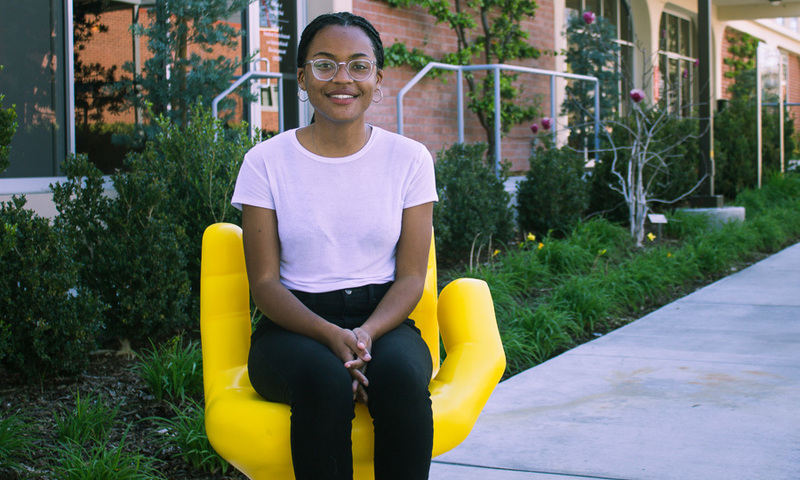
Celeste just wants to be called a writer, plain and simple. It reductionist to call her a journalist, or an editor, or a screenwriter. She all of those things, yes, but she always had a knack for wordsmithing.
Celeste role as a writer has shifted over time. 鈥淢y roots as a writer have been in short stories,鈥� she says. When she came to Biola she took that love for narrative and used it in her screenwriting classes. Lately, she been moving into journalism and editorial work.
Refining natural talent is a challenge, but writing in different mediums has given Celeste unique insight into the process. Through hard work and risk taking, she turned her affinity for writing into a powerful skill.
The Humility to Learn
鈥淛ust because you have natural talent doesn鈥檛 mean you can鈥檛 still learn.鈥�
That the major lesson Celeste took away from her first screenwriting class, one of the hardest she taken in the film program. On the first day, her professor expected they dress professionally and bring in three pitches for scripts, along with a short presentation.
Celeste felt in over her head. Up until this class, she had never written a screenplay, now she was expected to pitch an idea for three of them.
Over the course of the semester, she wrote half of a screenplay. That about sixty pages of content, not including drafts, revisions, and the hours spent coming up with characters and storylines. The next class she took she wrote a full one.
鈥淚 came into college thinking 鈥業鈥檓 so talented, I鈥檝e been writing since I was in elementary school,鈥欌�� she says. Screenwriting was a wake up call. Going from not knowing anything to writing a screenplay was a humbling and confidence building process.
Celeste chose to use her natural talent constructively, not as an excuse to take it easy or pretend she was above it all. She put in the work it took to learn and proved her talent could produce something tangible - an entire movie script.
Take Risks
Celeste loves to try new things. In the few years she been at 91制片厂 she started a podcast, collaborated on film projects with professors, and most recently, stepped into the world of journalism.
Unlike starting a podcast or collaborations, which sort of fell into her lap, this didn鈥檛. It took courage to pursue opportunities for journalism.
She currently working on the editorial board for Grit, a new women resource blog at 91制片厂. She helping to write for the blog, manage social media and seek out resources for women on campus. It a whole new direction for her, but she loves it.
鈥淚 got to work and I don鈥檛 want to leave,鈥� she says.
Celeste also wrote an article for , a student-produced magazine. In it she talks about the intersection of race and gender. It an important and vulnerable topic to tackle, especially for someone who writes about fictional characters rather than herself.
鈥淚t a different kind of format where I鈥檓 sharing more,鈥� she says.
Sharing a piece of oneself is always an emotional risk, and perhaps this is the hardest thing about Celeste journalistic aspirations. Her opinions, thoughts, and feelings are all out on the table via her writing. Challenges are essential in order to refine natural talent, and sometimes you just have to take the risk when there isn鈥檛 a professor or mentor around to force you.
Share Your Work
Celeste says she always been shy about sharing her talents.
鈥淚 used to make YouTube videos in high school鈥� I was making these for years and I hadn鈥檛 told the world about them,鈥� she says. 鈥淚 have a problem with not wanting to share the things that I鈥檓 doing鈥�
Creating and executing projects is a cakewalk, but in retrospect she regrets not sharing more. She looks back and sees a lot of missed opportunities.
Still, Celeste remembers a big opportunity that came about because she was able to share her talents with someone else. As a Resident Advisor (RA) she had frequent one-on-ones with her Resident Director (RD). These were times for Celeste to talk about her skills and passions.
Later, her RD was talking with Associate Dean of Spiritual Development Lisa Igram about an upcoming women's resource blog. She recommended Celeste to Lisa and she was hired to work on what would soon be known as Grit.
鈥淪he got me the job for the women resource blog, basically,鈥� she says.
Celeste tends to think that her projects are not a big deal, or that sharing them will bother other people. This is not the case. Everyone has natural talents, but if others don鈥檛 get a chance to see them, there will be less opportunities for growth and development.
Know Your Limits
Celeste had the opportunity to write a screenplay with her screenwriting professor and a fellow student. They wrote a feature film together over last summer. It was meant to be a Biola film.
鈥淚t was hard for me a little bit, since I love doing my own thing,鈥� she says.
It was good for her. She was able to apply what she had learned in screenwriting classes, and experience what a writer room was like. Ultimately though, she realized that type of collaboration wasn鈥檛 totally for her.
鈥淥k, I wanna do my own thing鈥� that just me being 100 percent honest,鈥� she says.
Celeste found she wasn鈥檛 very good at sharing the task of writing with others, though she has worked well with others on projects like Grit.
It important to know your limits. You may work well in one context, then do something very similar in another context but feel drained and uninspired. Having natural talent does not mean you will be good at everything your discipline touches.
As with any talent, it takes lots and lots of practice to hone your skills. Celeste has courageously expedited this process by humbling, challenging, and sharing herself. Many people are hesitant to refine their skills, but it only natural that talent should be tested.
Want more inspiring stories? Subscribe to our newsletter to get fresh stories every 2 weeks.



.jpg)